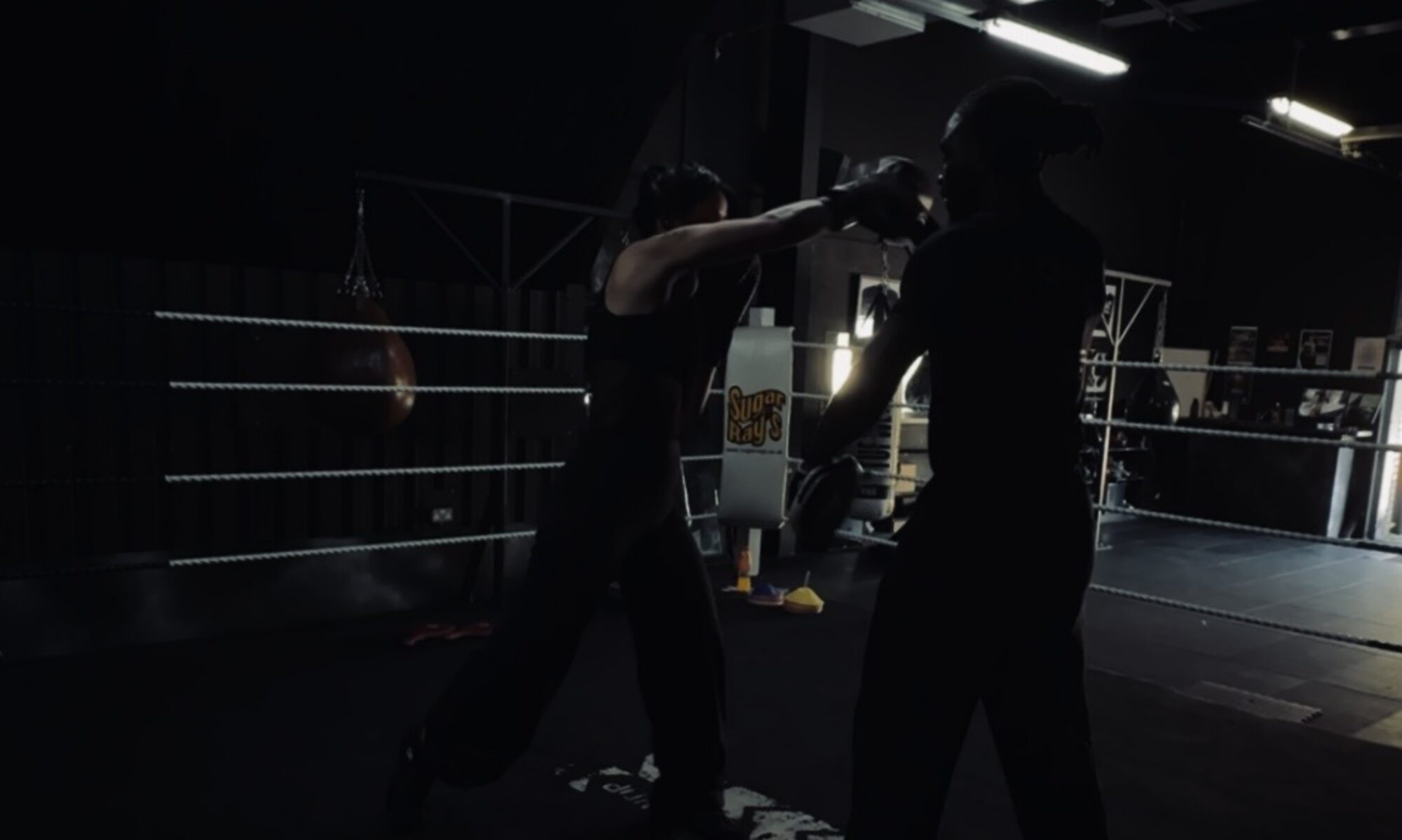
Not long ago, I started journaling again and realised that most of what I wrote about was the people I had met through boxing or the lessons I had learned from my boxing journey.
Why and When I Started
For almost four years, I had lived with hip pain caused by anatomical changes resulting from osteoarthritis. The only reason I managed to cope with the chronic pain was because I lifted weights consistently. Strength training became my way of protecting my body and holding on to some sense of normality, but every winter the pain reminded me that my hip was getting worse. By the end of 2025, I scheduled a total hip replacement for February 2026.
One day after work, I happened to bump into a colleague on my way to the gym. He competed in Muay Thai, and we talked about his very first fight. I mentioned that I’d always wanted to try boxing. He looked at me and simply asked, “Why not?” It was such a simple question, but it stayed with me.
Just before Christmas, I rewatched the entire Rocky box set, and once again, Rocky’s solitude felt hugely familiar. I’m just another person who got into boxing because of Rocky, and I’ll never be embarrassed to admit it. People often mistake me for an extrovert, but that’s only because life has pushed me to adapt to almost any environment, however I’ve always been a lone wolf, never liked team sports, and always enjoyed spending time by myself. I’ve also naturally gravitated towards predominantly male environments. In my experience, they tend to feel emotionally less demanding, allowing me to connect without becoming overwhelmed.
Choosing boxing made very little sense on paper and was strongly discouraged by medical professionals. Ironically, I had chosen one of the sports that demands the most from the hips. With a CAM deformity, hip impingement, and a torn labrum on my left hip, it was probably the last sport anyone would have recommended. Yet something kept pulling me towards it. I knew this hip would be gone sooner or later, so I went ahead and made the most of the steroid injection I took in November 2025.
In the first week of January 2026, I booked my first one-to-one session at an MMA gym near my home. The feeling of learning something completely new made me forget about my hip, if only for an hour. My second session ended with a broken toe and terrible calf pain, which was quickly fixed by my osteopath. A week later, I was due to have my third session. However, this never happened because the trainer got his schedule mixed up and simply didn’t show up. I asked for a refund and never went back.
Soon afterwards, I joined a proper boxing gym near my office. My first trainer took me from knowing absolutely nothing to having a foundation from mid February to mid April 2026. I learned how to jab, throw a cross, but had a 💩 left hook because of my left hip, I couldn’t rely on my lead leg properly, making it painful to rotate and generate power. Still, every session felt like a wee progress. I also noticed that my hip pain was significantly better than when I was only lifting weights. I started to believe boxing made a wee miracle. However, there was a scientific explanation. The rotational movements in boxing strengthened deep stabilising muscles, particularly my piriformis and gluteus minimus, through repeated axial rotation, something conventional weight training had never effectively targeted.
After around ten one-to-one sessions and a very few group classes, I travelled to London to attend Fury x Makhmudov at Hot Spurs. While I was there, I trained at Afewee Brixton and Finchley ABC, the amateur club where Anthony Joshua developed as a boxer. At Finchley, Yaqob, an exceptional athlete, completely changed how I thought about boxing while we were doing pad work. In a single session, he opened my eyes to head movement, angles, and the importance of moving around the ring. From London, I travelled to Budapest where I trained with a Russian coach, Bohdan. Despite the language barrier, he managed to teach me an incredible amount of the soviet style in just one session, reminding me that good coaching often goes far beyond words.
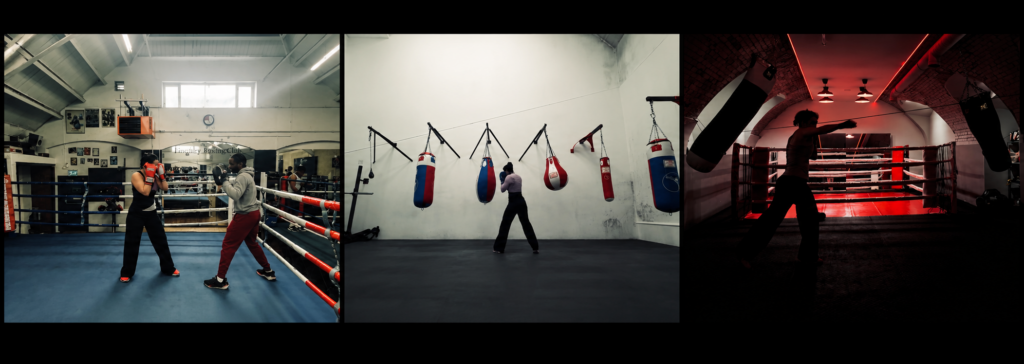
When I returned to Edinburgh, I realised I was ready to try new boxing gyms and also ready to rebook my hip replacement, which I had postponed because I feared the long recovery would affect my mental health due to not being able to be as active as I was at the time. This is when, in April 2026, I met my second trainer in a much more traditional, old-school atmosphere. He trained me from mid April until my hip replacement in May 2026. After my hip replacement and the events surrounding the outcome of my connection with my second trainer, I’ve been attending occasional boxing classes in Edinburgh while taking one-to-one sessions with my third trainer, a pro boxer based in Glasgow.
Boxing rekindled something I thought I had lost since lockdown: the curiosity to meet new people and learn from their stories. I found myself surrounded by individuals whose lives had been shaped by adversity, loss, and remarkable resilience. I realised I was becoming as interested in their stories, maybe as much as becoming a boxer. At the same time, the sport itself and the excess I observed in some boxing gyms strengthened my passion for healthy living even more.
Starting at Forty-One
Discovering boxing at age 41 (now 42) changes the story. It removes the fantasy of becoming someone else and replaces it with a more meaningful purpose: every round becomes less about performance and more about presence.
A Different Kind of Strength
At its best, boxing can teach a form of strength that is not built on domination. It can teach regulation, patience, respect, and recovery. It can help people reconnect with their bodies, face discomfort honestly, and develop confidence that is grounded rather than performative.